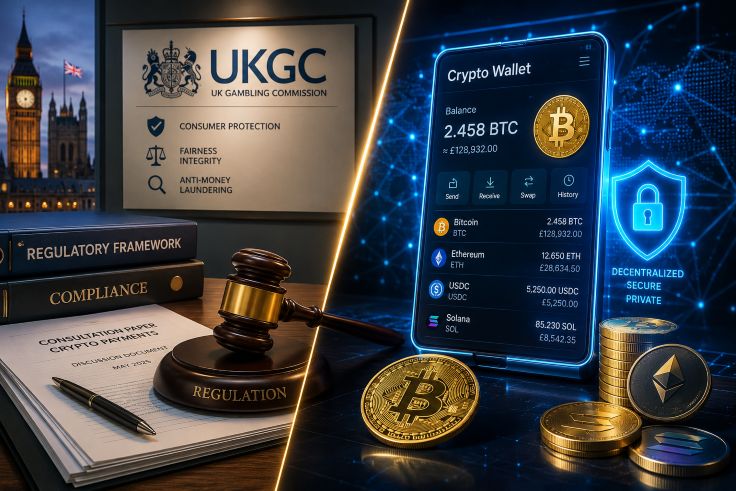
UK-licensed gambling operators currently cannot accept cryptocurrencies for betting payments. That single fact sits at the heart of a debate that is now reshaping the entire British gambling market. The UK Gambling Commission is actively studying whether, and how, digital assets could be brought inside the licensed ecosystem, and the outcome will affect every player who has ever used Bitcoin, Ether, or a stable coin to fund a casino account.
The conversation is gaining momentum fast. Recent crypto gambling regulation 2026 analysis has tracked a wave of parallel moves in the UK: a new statutory framework for crypto assets enacted in February, a series of Financial Conduct Authority consultation papers, and now a formal signal from the UKGC that crypto payments are on the regulatory agenda. These developments do not exist in a vacuum. They form a coordinated push to decide whether digital asset gambling belongs inside the tent or stays permanently outside it.
The UKGC Opens the Door, Carefully
The trigger was public and direct. UKGC Executive Director Tim Miller, speaking at the Betting and Gaming Council’s Annual General Meeting, confirmed the Commission had tasked its Industry Forum with exploring what a “sensible pathway might look like” for allowing crypto payments inside the licensed market. The language was measured, but the signal was clear: the regulator is no longer dismissing the question.
CEO Andrew Rhodes went further at the Commission’s annual CEO Briefing. He acknowledged that the growth of crypto among younger demographics is “building pressure within the system,” and predicted that within a few years there will be a significant cohort of consumers who use cryptocurrencies simply because that is what they have grown up with. Ignoring that reality, he implied, risks pushing those players toward unregulated alternatives rather than protecting them.
The legal backdrop matters here. A UK Parliament written answer from May 2025 confirmed that any operator accepting crypto under the current regime would breach existing requirements around payments, anti-money laundering, and consumer protection. Any future framework would require operators to satisfy AML and social-responsibility obligations and formally notify the regulator, potentially through license amendments.
Why Regulators Want In on Crypto
The instinct might be to read regulatory interest as hostile. In practice, the UKGC’s motivation is more pragmatic. Unregulated offshore crypto casinos are not going away. They are growing. Webopedia research on iGaming trends notes a defining shift underway globally: activity is moving from loosely regulated offshore operators toward formal frameworks, driven partly by the EU’s Markets in Crypto-Assets Regulation (MiCA) and tightening AML protocols worldwide.
The risk the Commission is trying to manage is a familiar one in gambling policy: prohibition without enforcement simply relocates harm. Quantify Crypto analysis describes what unregulated grey areas actually mean for players. Offshore platforms offer no guaranteed payouts, no complaints mechanism, and exposure to sudden policy shifts that can criminalize past behavior overnight. When a player moves to an unlicensed crypto casino, they take on all of that risk invisibly, with no recourse if things go wrong.
From a financial crime perspective, the stakes are even higher. Governments and financial authorities have raised concerns that significant sums may be laundered through anonymous crypto gambling platforms annually. AML compliance has become a central focus of enforcement globally. The logic for regulators is straightforward: bringing crypto inside licensed markets makes it visible, traceable, and controllable. Leaving it outside simply exports the problem.
What a Regulated Framework Could Look Like
The UK is not starting from scratch. The Financial Services and Markets Act 2000 (Crypto assets) Regulations 2026, enacted in February, established a comprehensive statutory framework for regulating crypto asset activities in the country. The FCA followed with a series of consultation papers covering conduct standards, consumer protection, prudential requirements, and a proposed stable coin sandbox targeted for early 2026 to test regulated payment use cases. Crypto firms will be able to start applying for FCA authorization from September 2026, with the full regime expected to go live in October 2027.
For gambling specifically, the likely shape of any UKGC-approved crypto framework involves layering gambling-specific obligations on top of the FCA financial regime. That means wallet due diligence mapped to payment-system requirements, enhanced KYC checks, on-chain transaction monitoring, and strict source-of-funds verification. Stable coins, which already account for over half of all crypto wagers globally according to industry data, would likely be the first payment type considered, given their lower volatility and cleaner audit trails compared to Bitcoin.
Malta offers a useful precedent. The Malta Gaming Authority already allows licensed operators to accept virtual assets as payment, but only after obtaining explicit MGA approval. That tiered, permission-based model, where crypto is permitted but gated behind additional compliance sign-off, is the template most likely to appeal to the UKGC as it balances innovation against consumer protection.
Risk vs. Opportunity for Players and Operators
For players, the regulatory shift cuts both ways. The upside is meaningful: a regulated crypto gambling environment would come with complaint resolution rights, responsible gambling tools, segregated funds protections, and the ability to trust that a platform is solvent. Right now, none of those safeguards exist when playing at an offshore crypto casino.
The downside is equally real. Regulation brings compliance costs, and those costs do not disappear. They get passed on. Faster transaction speeds and lower fees, two of the main reasons players prefer crypto payments, may narrow as operators absorb the overhead of enhanced due diligence. Anonymity, a feature some players value, disappears almost entirely in a licensed environment where KYC is mandatory.
There is also a data risk that deserves attention. Bitcoin Chaser documented multiple cases in 2024 and 2025 where identity documents submitted during offshore casino account verification were subsequently leaked or sold to fraud operators on dark web marketplaces. A regulated UK framework, with its data protection obligations under UK GDPR, would significantly reduce that exposure, but it requires players to trust the regulator’s oversight capacity to deliver on that promise.
For operators, the opportunity is access to a growing payment demographic without the legal ambiguity. The compliance burden is substantial, but it comes with the competitive advantage of operating legally in one of the world’s most lucrative gambling markets.
Timeline to Watch
The immediate milestones are concrete. The FCA’s crypto authorization window opens in September 2026. The full UK crypto regulatory regime goes live in October 2027. The UKGC’s Industry Forum is actively working on a pathway framework, with no fixed deadline for recommendations but a clear expectation of movement within the next two years.
Players who currently use crypto at offshore sites should treat this period as a transition window, not a green light. The regulatory direction across the EU, UK, and US is converging on stricter digital asset oversight. Staying on unlicensed platforms while that transition happens means accepting risks that are only growing, not shrinking.
The UKGC’s review does not guarantee that Bitcoin deposits at UK casinos are coming soon. What it does signal is that the question of digital asset gambling policy in Britain is no longer being deferred. The debate is open, the frameworks are forming, and the window for shaping a sensible outcome, for players, operators, and regulators alike, is narrowing. For anyone whose bankroll touches crypto in any form, paying attention to how that debate resolves is not optional. It is financially prudent.

 Financial advisor to help you invest in things




 Online gambling is not only entertainment. It also functions as a financial ecosystem supported by digital payments, software platforms, and global service providers. One concept that often appears in international gambling discussions is a casino without a game break (source: casino utan spelpaus). These casinos operate without mandatory pauses between gaming sessions, which creates a different style of play compared to platforms that enforce scheduled breaks.




 Gambling and finance have more in common than most people think. Both deal with calculated risk, money management, and smart decision-making. Many players enjoy games like baccarat because they offer simple rules and clear outcomes. Baccarat also attracts people who treat the game like a financial activity. They look at patterns, track results, and set limits, much like investors watching market trends.
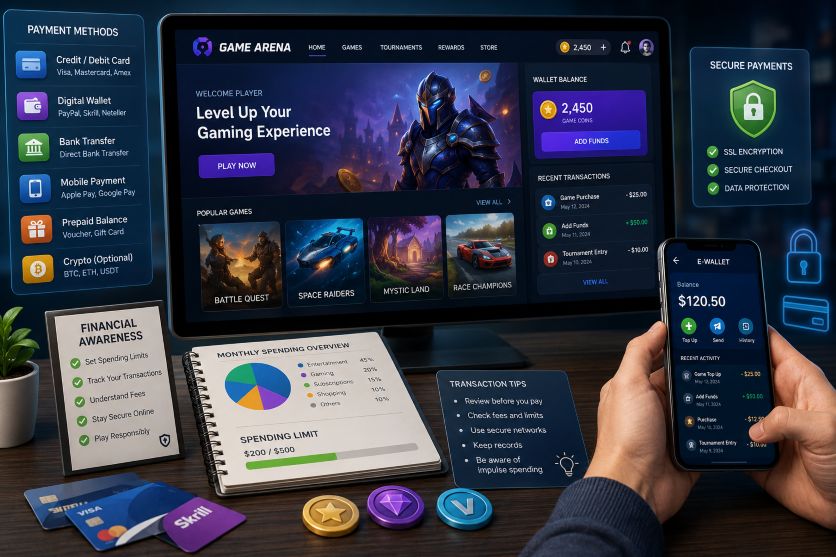
 Gambling can be a thrilling escape, but without a plan, your winnings might slip through your fingers like sand. Responsible financial management is key to enjoying online betting platforms while keeping your wallet secure. This guide offers practical strategies for handling your gambling finances, with a focus on budgeting, understanding withdrawal policies, avoiding bonus traps, and navigating crypto transactions. Whether you’re a seasoned player or new to the game, these tips will help you stay in control and make the most of your experience.
 Significant sporting events like Wimbledon and the World Cup draw millions of fans—and billions in bets. Whether tennis on grass or football on the world stage, these tournaments offer high drama and big opportunities for sports bettors. But they also come with risks. Emotions run high. Favorites fall. Underdogs surprise.
 Gambling in Korea, especially online, has become increasingly popular, offering bettors the convenience of accessing games and platforms from anywhere. However, this convenience often leads to impulsive betting habits, making financial management critical for anyone engaged in online gambling. Without a proper plan, the excitement can quickly turn into financial stress.
 For Korean bettors interested in online betting, the payment method is crucial. From local banking options to international e-wallets, knowing how to deposit and withdraw funds can make a big difference in the user experience. Choosing the right payment method affects security, transaction speed, and potential fees, which is essential for those using platforms like Bet365 Korea.
 Sports betting can be more than a hobby—it can be an investment with a well-planned approach. Betting on sports is thrilling, but making it a source of financial success requires a strategy. Many bettors lose out because they jump into it emotionally without any clear game plan. For those who treat it like an investment, however, there are ways to manage risks, make calculated decisions, and enjoy potential investment returns.
 Traditional online casinos collect personal information from players, including identification documents, banking details, and more. While this helps casinos comply with regulations, it also raises privacy risks for players. In response to these concerns, decentralized casinos, which use blockchain technology, have emerged as a possible solution. These casinos offer better privacy and data security compared to their traditional counterparts. But are they the future of private
 It is highly crucial to know the rules and comprehend the ways of winning especially right before you begin spinning the reels. Don’t forget to stick to your budget and be careful on playing online slots so that you’ll guarantee yourself to have some fun and win bucks.